How Asia turned me into a maker of cute octopus art, and the Chinese AI tools I learned for it
TL;DR: Asia got under my skin, and a takoyaki stall in Japan left me stuck on octopuses. That turned into Octopop, my line of cute octopus art. Then I taught myself to animate the drawings using Chinese AI tools that cost a fraction of the famous ones. Here is the story, the tools, and where the shop lives.

The first octopus that stayed with me was on a hot iron plate. Osaka, a takoyaki stall, the cook turning little spheres of batter with a metal pick, an octopus flag snapping over the counter. I did not set out to make cute octopus art. I set out to eat. But the shape stuck: eight arms, a round head, a face that reads as friendly even when the animal is anything but. Four years living across Japan, Korea and Taiwan, and that shape kept turning up. On manhole covers. In aquarium tanks the size of a room. Printed on a child's lunchbox. Asia has a way of taking something you walked past and making you look again. By the time I got home to Augsburg, the octopus had moved in and started paying rent.
How my cute octopus art started in Asia
I came back from Asia with a sketchbook full of small details rather than big sights. Knot motifs. Temple rooflines. The colour of a convenience-store morning. Somewhere in there, sea creatures kept surfacing, and the octopus won. Octopus and jellyfish had always fascinated me, the two strangest shapes in the water. In Osaka the octopus is everywhere: on shop signs, on keychains, on snack packaging, a whole city fond of one animal. Back in Europe you can walk through a dozen stores and not find a single one. That gap is a large part of why Octopop exists. I have an eye for design and visualisation, so I read form and movement before function. The octopus is all form and movement. It has no fixed silhouette. It pours. That is exactly why my cute octopus art looks drawn rather than generated. I wanted a character, not a mascot.

Why the octopus, of all creatures
The octopus is a very drawable animal in the sea. It has three hearts, nine brains and blue blood, and it can change the colour and texture of its skin in a blink. An animal that expressive is built for character design. Mine just happen to have moods.
There is symbolism too, and it is the good kind. The octopus reads as adaptable, clever and quietly powerful, and it is often linked to feminine energy and creativity, the ability to run several things at once without dropping any of them. I did not want to draw one calm, generic octopus. I wanted a small cast. So Octopop has a sad one, an angry one mid ink-squirt, a spouting one having a bad day. The biology gave me permission. If a real octopus can rewrite its whole surface to show a mood, mine can sulk on a t-shirt.

Asia taught me to take cute seriously
Cute is not shallow. Research on kawaii shows that soft shapes and big eyes set off a real care response in the brain, the same reflex we have toward babies and small animals. Japan built a whole visual language on that reflex, and a surprising amount of it lives underwater.
The octopus has been in Japanese art for centuries, from Edo-period woodblock prints to Takashi Murakami, who took menacing sea creatures and turned them into kawaii pop icons. Aquariums did their part too. Japan is largely responsible for the jellyfish boom in aquarium design, whole dark halls built to show a moon jelly drifting like a lantern. Standing in one of those rooms rearranges what you think cute can carry. It can be calm, strange and a little sad, all at once. That is the register I wanted.
Teaching myself to make the octopuses move
Static drawings were not enough once I started posting. I wanted the octopuses to move, to blink, to squirt ink on a loop for a reel. I had never animated anything.
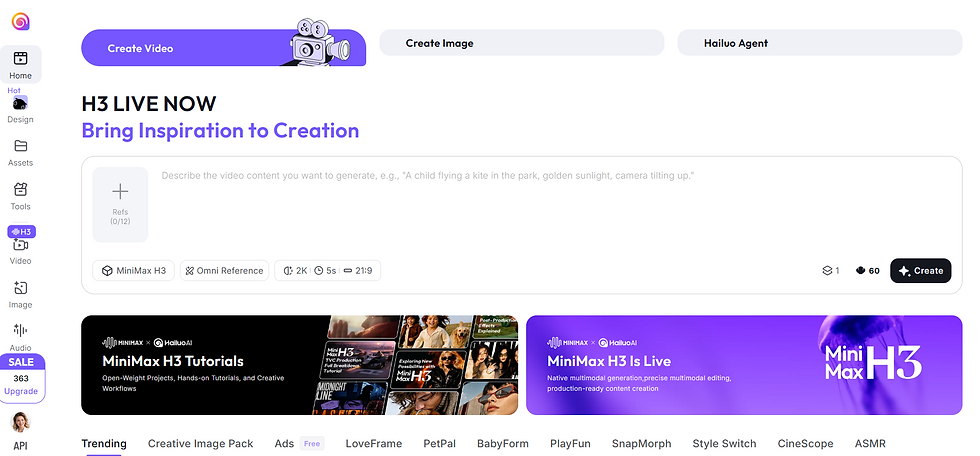
I used Hailuo AI to turn my illustrations into short video, feeding it a still and a description and coaxing motion out of it. The first results were a mess. Arms melted. A friendly face went uncanny. I rewrote prompts, cut the ambition, learned what the model was good at and stopped asking for the rest.
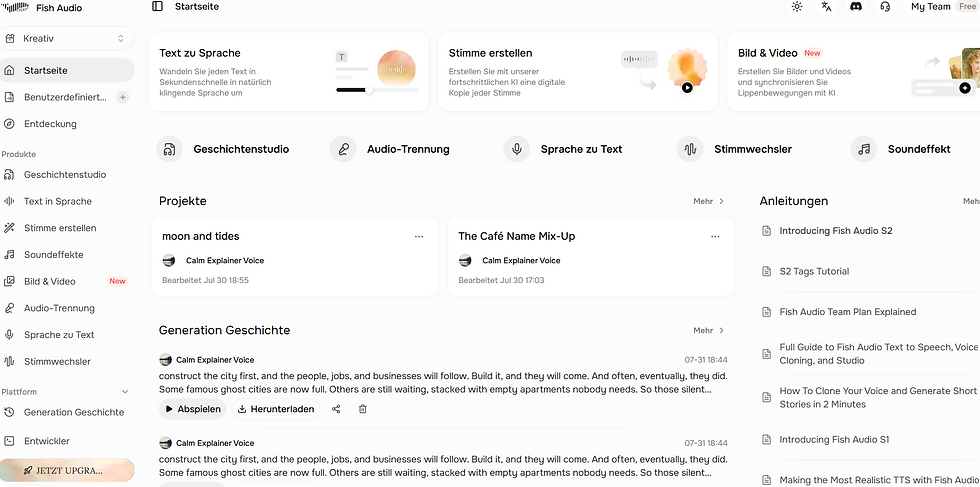
For voiceover I used Fish Audio, which generates speech that sits close to a real person. You can watch one of the results on TikTok. It is not a studio. It is a woman in Augsburg with a sketchbook and two browser tabs.
The Chinese AI tools quietly beating the big names
The tools I reached for are Chinese, and that is the interesting part. Fish Audio open-sources a text-to-speech model that outscores several closed, paid systems on standard benchmarks. MiniMax, the company behind Hailuo, opened the weights of its newest video model and priced generation at under a third of the famous names.
This is a pattern now, not an accident. The playbook that DeepSeek made famous, undercut on price and give the weights away, is spreading into voice and video. For a solo maker that changes the maths completely. I can animate a sticker design for the price of a coffee instead of a subscription I would resent. It is not perfect. These run on servers in China, so I keep anything sensitive off them, and hands and faces still glitch on every video model I have tried, not only the Chinese ones. But on price and openness, the gap has closed faster than most people in Europe realise.
What cute octopus art you will find in Octopop

Octopop is my octopus line inside ItaItsArt Etsy Shop. It runs on a red, black and white palette with a takoyaki theme, and each octopus has a mood. Stickers start around six dollars, tees sit in the twenties to low forties, and everything is made to order.

The range is meant to be lived with, not framed. Glossy vinyl stickers for a laptop. Kids' tees with the sad octopus or the ink-squirt one. A minimalist baby bodysuit. A tote, a phone case, an eleven or fifteen ounce mug, a spiral journal. It is all print-on-demand through Printful, so each piece is made when you order it, which means less waste and no dead stock in a cupboard. If you love Japan, or you know a small human who would adopt a cartoon octopus on sight, this is for you. If you want a quiet minimalist print, look elsewhere. These have opinions.

Where it all landed
Three things I did not expect when I started. A takoyaki stall would outlast every temple in my memory. Cute would turn out to be the hardest thing to design well. And the tools that finally let me animate my cute octopus art would come from China, cost almost nothing, and mostly just work. If you want to see where it went, the Octopop line is on Etsy, and the making-of clips are on TikTok. For the China and AI side of my world, the tips I actually use, follow https://www.instagram.com/awaytoday.asia and @awaytoday.knots on Instagram. That is where the useful stuff lives.
it's time to be away today!
Some texts and images where AI generated.
FAQ
What does an octopus symbolise?
The octopus is usually read as a symbol of adaptability, intelligence and creativity, and it is often linked to feminine energy and the ability to juggle many things at once. That last part comes straight from its biology: nine brains and eight semi-independent arms. It is a flattering animal to identify with.
Why are octopuses so common in Japanese art?
Japan has a deep, old relationship with the sea, and the octopus has featured in its art since the Edo-period woodblock era. Contemporary artists like Takashi Murakami carried it into pop art, reshaping sea creatures into kawaii icons. Aquariums extended the same fascination, especially through Japan's famous jellyfish exhibits.
Is cute octopus art good for a kids' room?
Yes, and it is one of the reasons octopop exists. Soft round shapes and simple faces are exactly what young children respond to, and giving each octopus a clear mood, sad, angry, surprised, helps kids read emotion. The line includes kids' tees and a baby bodysuit for that reason.
What AI tools did you use to animate the illustrations?
I used Hailuo AI, made by MiniMax, to turn still illustrations into short video, and Fish Audio for the voiceover. Both are Chinese tools and both are far cheaper than the better-known Western options, which is what made the experiment possible on a small budget. Expect a learning curve.
Where can I buy octopop cute octopus art?
Octopop lives inside my Etsy shop, ItaItsArt. Everything is print-on-demand, from stickers and tees to totes, mugs and phone cases, so items are made when you order. New designs get added as I draw them.


Comments